
Best Tools for Keyword Clustering in 2026
SEO has changed significantly over the past few years. In the past, ranking a page was often about finding one valuable keyword and using it correctly throughout the content. Today, search engines have become much better at understanding topics, context, and user needs.
Modern SEO is no longer only about targeting individual keywords. It is about creating complete content that answers a user’s search journey.
This is where keyword clustering becomes important.
Keyword Cluster helps SEO professionals group related keywords together based on meaning, search intent, and ranking patterns. Instead of creating separate pages for every keyword variation, marketers can build stronger pages that cover an entire topic.
For example, a website targeting “email marketing software” may also want to rank for related searches like “best email marketing tools,” “email automation platforms,” “free email marketing software,” and “email campaign tools.”
These keywords have different wording, but they represent the same user need.
The right keyword clustering tool can help identify these relationships, save hours of manual work, and create a more effective SEO content strategy.
In this guide, we will explore the best tools for keyword clustering in 2026, their features, advantages, and how they help businesses improve their search visibility.
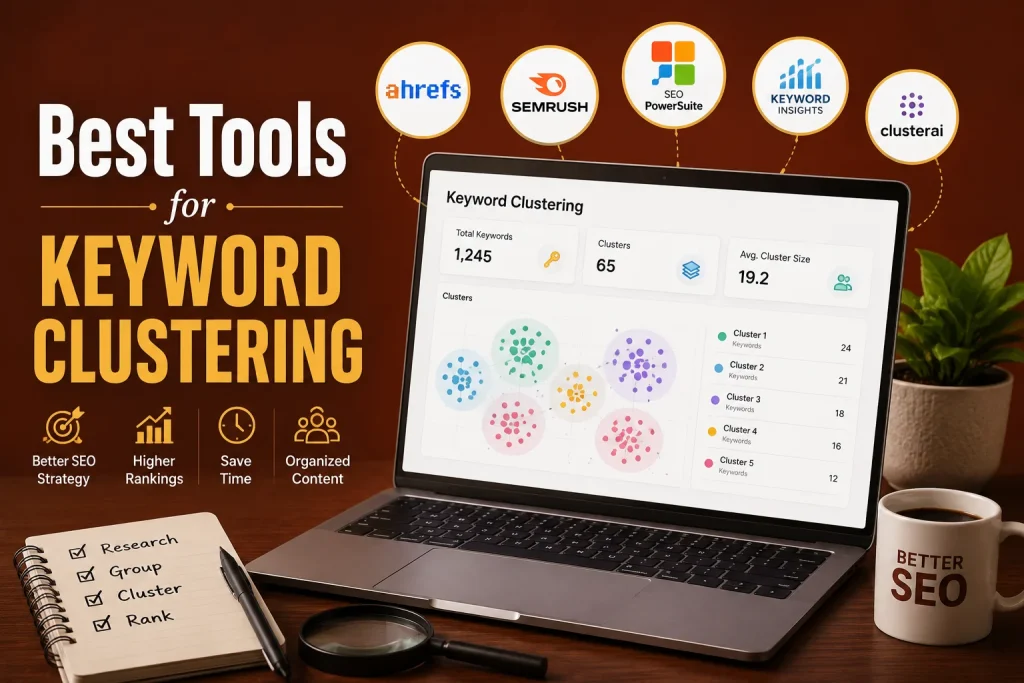
What Is Keyword Clustering?
Keyword clustering is the process of organizing related keywords into groups based on their relationship, meaning, and search intent.
A keyword cluster usually contains:
- One main keyword
- Related supporting keywords
- Long-tail keywords
- Questions users search
- Similar variations
For example, a keyword cluster around “home workout” could include:
- best home workout exercises
- home workout plan for beginners
- workout routine without equipment
- daily exercise at home
- home fitness tips
Instead of creating five different articles, an SEO professional can create one detailed resource that covers all these searches.
This approach helps search engines understand that the page provides complete information about the topic.
Why Keyword Clustering Is Important for SEO in 2026
Search engines are becoming more focused on understanding user intent.
Google does not only look for exact keyword matches. It evaluates whether a page provides useful information and covers a topic deeply.
Keyword clustering supports modern SEO strategies in several ways.
Helps Create More Complete Content
A single keyword rarely represents everything a user wants to know.
When marketers analyze related keywords, they discover additional questions, problems, and topics users care about.
This allows writers to create content that answers multiple searches in one place.
For example, someone searching for “best laptops” may also want information about:
- laptops for students
- laptops for gaming
- laptop battery life
- affordable laptop options
A properly created keyword cluster helps include these important areas.
Improves Organic Traffic Opportunities
One well-optimized page can rank for hundreds of related keywords.
Without keyword clustering, businesses often create separate pages for similar keywords. This can waste resources and create competition between their own pages.
A strong keyword cluster creates a better chance of ranking for multiple search terms with one powerful piece of content.
Supports Topic Authority
Search engines prefer websites that demonstrate knowledge about a subject.
Creating related content clusters helps websites build authority.
For example, a digital marketing website can create clusters around:
- SEO
- content marketing
- email marketing
- social media marketing
Each topic can contain multiple supporting articles connected together.
Reduces Keyword Cannibalization
Keyword cannibalization happens when multiple pages from the same website compete for similar keywords.
This can confuse search engines and reduce ranking performance.
Keyword clustering helps identify which keywords should belong on the same page and which topics need separate content.
How Do Keyword Clustering Tools Work?
Keyword clustering tools use different methods to organize keywords.
The most advanced tools analyze several factors.
Search Intent Analysis
Search intent shows what users actually want when they search.
Common search intents include:
Informational intent:
Users want to learn something.
Example: “How does keyword clustering work?”
Commercial intent:
Users are comparing options.
Example: “Best keyword clustering tools”
Transactional intent:
Users want to purchase or sign up.
Example: “Buy SEO software”
A good clustering tool groups keywords with similar intent together.
SERP-Based Keyword Grouping
Many professional tools analyze Google’s search results pages.
If several keywords show similar ranking pages, the tool identifies them as related.
For example:
“best running shoes”
“top running shoes”
“running shoes for beginners”
may show similar search results.
This indicates they likely belong to the same content cluster.
AI-Powered Keyword Analysis
Artificial intelligence has improved keyword clustering accuracy.
Traditional methods focused mainly on matching similar words.
AI tools understand:
- keyword meaning
- user behavior
- topic relationships
- content connections
This allows marketers to create smarter content plans.
Best Tools for Keyword Clustering in 2026
1. KeywordCluster.net
KeywordCluster.net is a specialized keyword clustering platform designed to help marketers organize large keyword lists quickly.
Unlike general SEO tools that offer keyword research as one feature, KeywordCluster.net focuses specifically on turning keyword data into organized clusters.
The platform helps SEO professionals:
- group thousands of keywords
- identify related topics
- organize content ideas
- improve SEO planning
- save manual research time
It is especially useful for agencies, bloggers, and businesses that manage large content campaigns.
For websites publishing hundreds of articles, keyword clustering provides a clear roadmap for deciding:
- which pages to create
- which keywords belong together
- how content should be structured
A dedicated clustering tool can make the entire SEO workflow faster and more organized.
2. Ahrefs Keywords Explorer
Ahrefs is one of the most widely used SEO platforms among professionals.
It provides detailed keyword research data, including:
- search volume
- keyword difficulty
- traffic potential
- competitor analysis
- related keyword ideas
SEO teams often use Ahrefs to collect keyword data before creating clusters.
Its large keyword database makes it useful for discovering new content opportunities.
However, users may still need additional clustering methods to organize large keyword lists into final topic groups.
3. Semrush Keyword Magic Tool
Semrush is another popular SEO platform used by marketers worldwide.
Its Keyword Magic Tool helps users discover thousands of keyword ideas.
Useful features include:
- keyword variations
- related searches
- question keywords
- search volume data
- competition analysis
Semrush works well for businesses that need keyword research, competitor insights, and SEO planning in one platform.
Many SEO professionals export Semrush keyword data and use clustering methods to create content strategies.
4. Keyword Insights
Keyword Insights is a platform focused heavily on keyword clustering and content planning.
The tool helps marketers analyze large keyword lists and organize them based on search results.
Important features include:
- automated keyword grouping
- search intent analysis
- content briefs
- topic discovery
It is commonly used by SEO agencies that manage multiple websites and large content projects.
5. Surfer SEO Content Planner
Surfer SEO combines keyword research with content optimization.
Its Content Planner helps users discover related topics and create content groups.
It is useful for:
- bloggers
- content teams
- SEO writers
- marketing agencies
The platform helps identify topics that should be covered together and provides content recommendations.
6. ClusterAi
ClusterAi is designed specifically for organizing keywords into meaningful groups.
It uses keyword relationships and ranking data to identify which terms should be targeted together.
The tool is helpful for SEO professionals who already have large keyword lists and need a faster way to organize them.
7. SE Ranking Keyword Grouper
SE Ranking provides SEO tools for keyword research, ranking tracking, and competitor analysis.
Its keyword grouping features help marketers organize keywords based on SERP similarities.
It is a useful option for:
- small businesses
- freelancers
- SEO agencies
The platform combines keyword management with other SEO tasks, making it suitable for complete SEO workflows.
Free Ways to Create Keyword Clusters
Not every business needs expensive SEO software.
Small websites can create keyword clusters using free methods.
Google Search Analysis
Google search results can provide valuable clustering information.
Search different keywords and compare ranking pages.
If the same websites appear for multiple keywords, those keywords may belong to one cluster.
Google Keyword Planner
Google Ads Keyword Planner is mainly designed for advertising research, but it can also help discover related keyword ideas.
It provides information about:
- keyword suggestions
- search trends
- estimated search volume
Marketers can export these keywords and organize them manually.
Google Sheets
Many SEO professionals still use spreadsheets for smaller projects.
A simple workflow:
Collect keywords.
Analyze search intent.
Group related terms.
Assign content topics.
Create content briefs.
This method requires more time but gives complete control.
AI Keyword Clustering: The Future of SEO Planning
AI is changing how marketers approach keyword research.
Previously, keyword grouping depended heavily on manual spreadsheet work.
Today, AI-powered tools can analyze thousands of keywords within minutes.
AI helps identify relationships between keywords that may not appear obvious.
For example:
“best CRM for startups”
“small business customer management software”
“startup sales tools”
These keywords use different words but represent a similar topic.
AI helps marketers discover these connections faster.
How to Choose the Right Keyword Clustering Tool
The best keyword clustering tool depends on your SEO goals.
Before choosing a platform, consider:
Number of Keywords
If you manage large websites, choose a tool that can process thousands of keywords.
Accuracy
A good tool should create meaningful groups instead of random keyword matches.
Search Intent Understanding
Tools that analyze user intent usually create better content plans.
Integration Options
Check whether the tool works with your existing SEO workflow.
Pricing
Choose a tool that fits your budget and project size.
Common Keyword Clustering Mistakes to Avoid
Many businesses make mistakes when creating keyword clusters.
One common mistake is grouping keywords only because they contain similar words.
For example:
“apple phone”
and
“apple fruit benefits”
contain the same word but have completely different meanings.
Another mistake is creating too many small clusters.
A cluster should represent a complete topic, not every small keyword variation.
The goal is creating useful content, not just organizing keywords.
Final Thoughts
Keyword clustering has become one of the most important parts of modern SEO.
As search engines focus more on topics, context, and user experience, businesses need better ways to organize their keyword research.
The best keyword clustering tools help marketers understand relationships between keywords, create stronger content strategies, and improve their chances of ranking.
Platforms like KeywordCluster.net, Ahrefs, Semrush, Keyword Insights, and Surfer SEO provide valuable solutions for different SEO needs.
Whether you manage a small blog or a large website, keyword clustering can help you build content that matches what users are searching for and creates long-term organic growth.
A smarter keyword strategy starts with understanding how keywords connect. And keyword clustering is the process that turns thousands of search terms into a clear SEO roadmap.