
How a Day Counter Can Help You Plan PC Upgrades and Performance Testing
Building or upgrading a PC is not only about choosing the fastest processor or the most powerful graphics card. Good planning also matters. You may need to track how long you have used a component, calculate the time remaining on a warranty, schedule benchmark tests, compare performance before and after an upgrade, or determine how many days are left before a new piece of hardware arrives.
This is where https://contagemdedias.com.br/ can become surprisingly useful. Just as a PC bottleneck calculator helps identify whether the CPU, GPU, RAM, or another component could limit system performance, a date calculator helps organize the time side of your PC setup. By calculating the exact number of days between two dates, users can make upgrade schedules and performance comparisons much easier to manage.
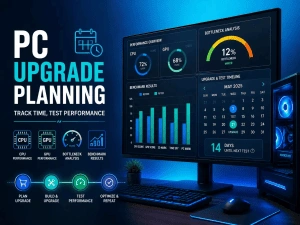
Why Time Tracking Matters for PC Owners
PC hardware performance changes over time. A newly built gaming computer may perform perfectly during its first months, but after prolonged use, operating-system updates, driver changes, increased storage usage, dust accumulation, or new game requirements can affect performance.
For this reason, it can be useful to record important dates related to your computer. These may include the date you purchased a graphics card, installed a processor, replaced thermal paste, upgraded RAM, or performed a clean Windows installation.
Instead of manually counting weeks or months, you can use a reliable contador de dias to calculate the exact interval between two dates. It can display the period in days, weeks, months, and years, making it easier to understand how long a component or configuration has been in use.
For people who regularly benchmark their computers, accurate time tracking can also create more meaningful performance records.
Combining Date Tracking With a PC Bottleneck Calculator
A bottleneck occurs when one PC component prevents another component from reaching its full performance potential. For example, a powerful graphics card paired with an older processor may result in the CPU limiting the GPU in certain games.
A PC bottleneck calculator provides users with a convenient way to evaluate whether their hardware combination appears balanced. However, performance should not always be evaluated only once.
Suppose you test your computer immediately after building it and record the result. Six months later, you upgrade your GPU and perform another bottleneck calculation. Knowing the exact number of days or months between these tests gives you a clearer performance history.
You could maintain records such as:
- Original PC build date
- First benchmark date
- CPU upgrade date
- GPU upgrade date
- Driver installation date
- Thermal paste replacement date
- Latest bottleneck test date
Combining performance tools with date tracking can therefore create a simple maintenance and upgrade history for your PC.
Planning Your Next PC Upgrade
Hardware upgrades are often based on both performance requirements and time.
Some users replace their graphics cards every three or four years, while others continue using the same GPU until it can no longer provide acceptable performance in newer games. CPUs may remain competitive for even longer depending on the workload.
If you know when you purchased a component, you can calculate exactly how long it has been installed.
For example, imagine that you installed a graphics card on March 15, 2023, and you are considering replacing it on September 15, 2026. A date counter can instantly calculate the complete period between those dates.
You can then combine that information with current benchmark results and a bottleneck calculator.
If the GPU is still performing well and your CPU is actually causing the limitation, replacing the graphics card may not be the smartest investment. On the other hand, if your current GPU is several years old and consistently reaches maximum utilization while the CPU has additional capacity, a GPU upgrade could make more sense.
Time does not determine whether you need an upgrade, but it provides useful context when analyzing hardware performance.
Track Benchmark Results Over Time
Benchmarking is one of the easiest ways to monitor PC performance.
Users commonly test their systems with CPU benchmarks, GPU benchmarks, gaming FPS tests, SSD speed tests, and temperature monitoring software. However, benchmark numbers become more valuable when you know when each test was performed.
Imagine recording the following:
January 10: Gaming benchmark averages 120 FPS.
April 10: The same game averages 115 FPS.
August 10: Performance drops to 105 FPS.
Instead of guessing how much time has passed, calculating the precise intervals helps you analyze the decline more accurately.
Performance changes may result from driver updates, game updates, higher background resource usage, thermal issues, storage problems, or even hardware degradation. Having both benchmark results and dates makes troubleshooting easier.
Calculate Warranty Periods for PC Components
Another practical use of counting days between dates is warranty management.
PC components often include warranties lasting one, two, three, or even five years. When you own multiple parts from different manufacturers, remembering every warranty expiration date can become difficult.
Important components may include:
Graphics Cards
GPUs are often among the most expensive components in a gaming system. Knowing how much warranty coverage remains can influence whether you attempt repairs yourself or contact the manufacturer.
Processors
CPUs generally have long service lives, but keeping the purchase date recorded is still helpful if an unexpected hardware problem occurs.
SSDs and Hard Drives
Storage devices can fail unexpectedly. In addition to checking drive health, keeping track of purchase and warranty dates can help with replacement claims.
Power Supplies
A quality PSU can last for many years. However, knowing its age is particularly important when upgrading to more power-hungry CPUs or GPUs.
Using date calculations allows you to determine exactly how long each component has been installed and how much warranty coverage may remain.
Schedule Routine PC Maintenance
Performance problems do not always mean that your CPU or GPU needs replacing. Sometimes basic maintenance can make a noticeable difference.
Dust buildup can restrict airflow and increase temperatures. Higher temperatures may cause processors and graphics cards to lower their clock speeds to protect themselves, potentially reducing gaming performance.
Instead of cleaning your PC randomly, you can create a maintenance schedule based on dates.
For example, you could clean your PC every 90 or 180 days depending on the environment. You could also record when thermal paste was replaced or when important software maintenance was completed.
A day counter makes it easy to determine whether the scheduled maintenance interval has passed.
This can be particularly useful when investigating a suspected performance bottleneck. Before purchasing new hardware, checking temperatures, cooling, drivers, and maintenance history can help rule out other causes.
Calendar Days vs Business Days
Different types of date calculations serve different purposes.
Calendar days include every day between two dates, including weekends and holidays. They are useful when tracking hardware age, maintenance schedules, subscriptions, or the total amount of time between benchmark tests.
Business days normally include weekdays while excluding weekends and, depending on the calculation method, public holidays.
Business-day calculations may be useful when waiting for a PC component to be repaired, processed under warranty, or delivered by a company that provides estimates in working days.
For example, seven calendar days may contain only five normal business days. Understanding the difference helps avoid confusion when estimating repair or delivery times.
Using Excel to Track Your PC Hardware
Users who prefer maintaining detailed records can also create a simple Excel spreadsheet.
You might create columns for:
| Component | Purchase Date | Installation Date | Warranty End | Last Test |
| CPU | Date | Date | Date | Date |
| GPU | Date | Date | Date | Date |
| RAM | Date | Date | Date | Date |
| SSD | Date | Date | Date | Date |
| PSU | Date | Date | Date | Date |
Excel can calculate date differences using formulas such as DATEDIF, allowing you to track the number of days, months, or years between dates.
An online date calculator is generally faster for occasional calculations, while a spreadsheet can be better for maintaining a long-term PC hardware history.
Make Better Upgrade Decisions With More Data
No single tool can tell you everything about your computer.
A bottleneck calculator can provide useful information about how balanced your components are, but you should also consider real-world benchmarks, resolution, game requirements, temperatures, RAM capacity, storage performance, and your specific workload.
Adding hardware age and performance history provides another useful layer of information.
For example, instead of simply deciding that your PC “feels slower,” you could know that your system has been running with the same configuration for 1,000 days, compare current benchmark scores with results from the original build, check for potential bottlenecks, and then decide which component actually deserves an upgrade.
That approach can prevent unnecessary spending while helping you prioritize upgrades that are more likely to improve performance.
Conclusion
Date calculations may seem unrelated to PC performance at first, but they can be extremely useful for anyone who wants to maintain, benchmark, or upgrade a computer systematically.
An accurate day counter can help you track hardware age, warranty periods, benchmark intervals, maintenance schedules, repair timelines, and future upgrades. When combined with a PC bottleneck calculator and real-world performance testing, it gives you a more complete picture of both your computer’s performance and its history.
Instead of relying on memory, keeping accurate dates and performance records can make future PC upgrade decisions much easier.
Frequently Asked Questions
Can a day counter tell me when I should upgrade my PC?
Not directly. A day counter tells you how long you have used a component. You should combine that information with performance benchmarks, hardware requirements, temperatures, and bottleneck analysis before upgrading.
How often should I check my PC for bottlenecks?
There is no fixed interval. It is particularly useful to check after upgrading a CPU, GPU, or other major component, or when you notice unexpected performance problems.
Why should I record the installation dates of PC components?
Installation dates help you track component age, maintenance intervals, warranty periods, and how long a particular hardware configuration has been running.
Are calendar days and business days the same?
No. Calendar days include weekends and holidays, while business days generally refer to normal working days. Business-day calculations can be useful for estimating repair, warranty, and shipping timelines.
Can I track PC component dates in Excel?
Yes. Excel allows you to record purchase, installation, maintenance, and warranty dates and calculate the difference between them using date formulas.
Should I replace old hardware simply because it is several years old?
Not necessarily. If the component still delivers the performance you need and operates reliably, replacement may not be necessary. Hardware age should be considered together with benchmarks, bottleneck analysis, temperatures, and your current computing requirements.